Home / Mount Everest
hard

Mount Everest

duration icon
Duration
58 Days
altitude icon
Max Altitude
8848M
group icon
Group Size
Max 2-4

Trip Description

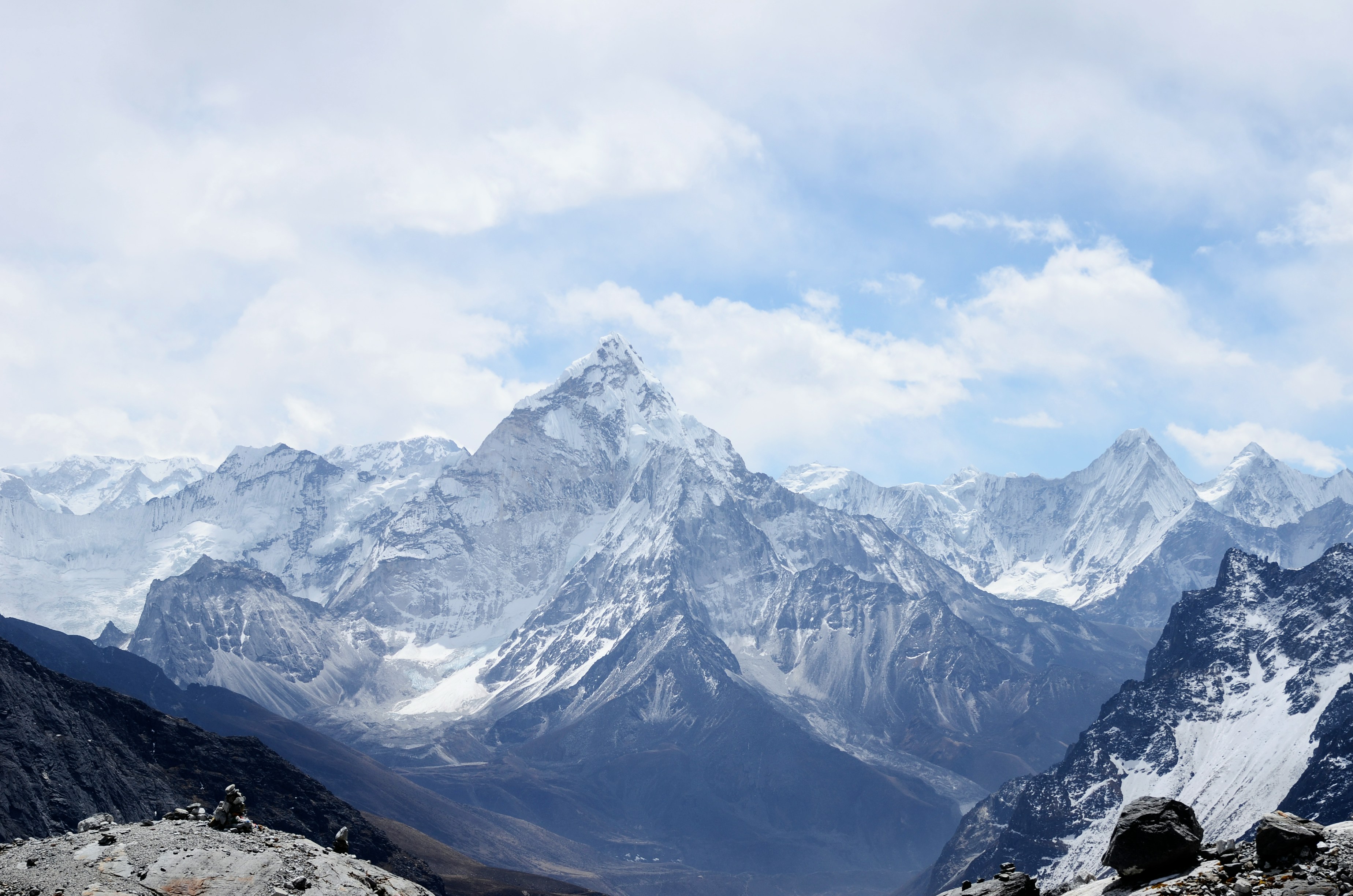
Mount Everest, known as the highest mountain on Earth, stands at a staggering height of 8,848.86 meters (29,031.7 feet) above sea level. It is located in the Himalayas, on the border between Nepal and the Tibet Autonomous Region of China. The mountain is part of the Himalayan mountain range, which is home to some of the world's most famous peaks.

The Alpinist Climber Expedition's strategies and approach to climb Mount Everest have been the reasons that helped us to keep up with the highest success rates. We give a high Guide ratio, ensuring the right support for your summit and the safety.

As the climbers stand on the summit, they also become part of an exceptional adventure. However, it is crucial to remember that the mountain demands respect. As well as safety should always be the first priority for those who dare to attempt the climb. 

Trip Overview

Duration
Duration
58 Days
Including travel days
Max altitude
Max Altitude
8848M
Summit of Mount Everest
Difficulty
Best Season
March-May September-November
Ideal climbing window
Group size
Group Size
Max 2-4
Small team support
Region
Region
Everest Region
Expedition location
Overview
Overview
Expedition
High-altitude guided climb
Book Now
Phone
Speak to an Expert
9843314253
Free cancellation up to 90 days before departure. No hidden fees.
Trip overview background

Detailed Itinerary

When you arrive at Kathmandu airport our representative from Alpinist Climber Expeditions will be there to greet you and when you have gone through customs formalities our representative will pick you up and transfer you to your hotel. Once you are checked in our mountain guide and other participants will go through the final preparation for the trip. In the evening get ready to be introduced to Nepali cuisines.

3 Star Hotel
Altitude Gain
455

When you arrive at Kathmandu airport our representative from Alpinist Climber Expeditions will be there to greet you and when you have gone through customs formalities our representative will pick you up and transfer you to your hotel. Once you are checked in our mountain guide and other participants will go through the final preparation for the trip. In the evening get ready to be introduced to Nepali cuisines.

When you arrive at Kathmandu airport our representative from Alpinist Climber Expeditions will be there to greet you and when you have gone through customs formalities our representative will pick you up and transfer you to your hotel. Once you are checked in our mountain guide and other participants will go through the final preparation for the trip. In the evening get ready to be introduced to Nepali cuisines.

When you arrive at Kathmandu airport our representative from Alpinist Climber Expeditions will be there to greet you and when you have gone through customs formalities our representative will pick you up and transfer you to your hotel. Once you are checked in our mountain guide and other participants will go through the final preparation for the trip. In the evening get ready to be introduced to Nepali cuisines.

When you arrive at Kathmandu airport our representative from Alpinist Climber Expeditions will be there to greet you and when you have gone through customs formalities our representative will pick you up and transfer you to your hotel. Once you are checked in our mountain guide and other participants will go through the final preparation for the trip. In the evening get ready to be introduced to Nepali cuisines.

When you arrive at Kathmandu airport our representative from Alpinist Climber Expeditions will be there to greet you and when you have gone through customs formalities our representative will pick you up and transfer you to your hotel. Once you are checked in our mountain guide and other participants will go through the final preparation for the trip. In the evening get ready to be introduced to Nepali cuisines.

When you arrive at Kathmandu airport our representative from Alpinist Climber Expeditions will be there to greet you and when you have gone through customs formalities our representative will pick you up and transfer you to your hotel. Once you are checked in our mountain guide and other participants will go through the final preparation for the trip. In the evening get ready to be introduced to Nepali cuisines.

When you arrive at Kathmandu airport our representative from Alpinist Climber Expeditions will be there to greet you and when you have gone through customs formalities our representative will pick you up and transfer you to your hotel. Once you are checked in our mountain guide and other participants will go through the final preparation for the trip. In the evening get ready to be introduced to Nepali cuisines.

When you arrive at Kathmandu airport our representative from Alpinist Climber Expeditions will be there to greet you and when you have gone through customs formalities our representative

When you arrive at Kathmandu airport our representative from Alpinist Climber Expeditions will be there to greet you and when you have gone through customs formalities our representative will pick you up and transfer you to your hotel. Once you are checked in our mountain guide and other participants will go through the final preparation for the trip. In the evening get ready to be introduced to Nepali cuisines.

When you arrive at Kathmandu airport our representative from Alpinist Climber Expeditions will be there to greet you and when you have gone through customs formalities our representative will pick you up and transfer you to your hotel. Once you are checked in our mountain guide and other participants will go through the final preparation for the trip. In the evening get ready to be introduced to Nepali cuisines.

When you arrive at Kathmandu airport our representative from Alpinist Climber Expeditions will be there to greet you and when you have gone through customs formalities our representative will pick you up and transfer you to your hotel. Once you are checked in our mountain guide and other participants will go through the final preparation for the trip. In the evening get ready to be introduced to Nepali cuisines.

When you arrive at Kathmandu airport our representative from Alpinist Climber Expeditions will be there to greet you and when you have gone through customs formalities our representative will pick you up and transfer you to your hotel. Once you are checked in our mountain guide and other participants will go through the final preparation for the trip. In the evening get ready to be introduced to Nepali cuisines.

When you arrive at Kathmandu airport our representative from Alpinist Climber Expeditions will be there to greet you and when you have gone through customs formalities our representative will pick you up and transfer you to your hotel. Once you are checked in our mountain guide and other participants will go through the final preparation for the trip. In the evening get ready to be introduced to Nepali cuisines.

When you arrive at Kathmandu airport our representative from Alpinist Climber Expeditions will be there to greet you and when you have gone through customs formalities our representative will pick you up and transfer you to your hotel. Once you are checked in our mountain guide and other participants will go through the final preparation for the trip. In the evening get ready to be introduced to Nepali cuisines.

When you arrive at Kathmandu airport our representative from Alpinist Climber Expeditions will be there to greet you and when you have gone through customs formalities our representative will pick you up and transfer you to your hotel. Once you are checked in our mountain guide and other participants will go through the final preparation for the trip. In the evening get ready to be introduced to Nepali cuisines.

When you arrive at Kathmandu airport our representative from Alpinist Climber Expeditions will be there to greet you and when you have gone through customs formalities our representative will pick you up and transfer you to your hotel. Once you are checked in our mountain guide and other participants will go through the final preparation for the trip. In the evening get ready to be introduced to Nepali cuisines

When you arrive at Kathmandu airport our representative from Alpinist Climber Expeditions will be there to greet you and when you have gone through customs formalities our representative will pick you up and transfer you to your hotel. Once you are checked in our mountain guide and other participants will go through the final preparation for the trip. In the evening get ready to be introduced to Nepali cuisines.

When you arrive at Kathmandu airport our representative from Alpinist Climber Expeditions will be there to greet you and when you have gone through customs formalities our representative will pick you up and transfer you to your hotel. Once you are checked in our mountain guide and other participants will go through the final preparation for the trip. In the evening get ready to be introduced to Nepali cuisines.

Why ACE?

Alpinist Climber Expeditions was built around a principle that has guided every climb we have organized — that the quality of the experience on a mountain is directly tied to the quality and depth of experience of the people leading it. What sets Alpinist Climber Expeditions apart is something that cannot be manufactured or replicated — it comes from decades spent on these mountains, from the culture that formed us, and from a deeply held belief that every climb deserves to be done properly.


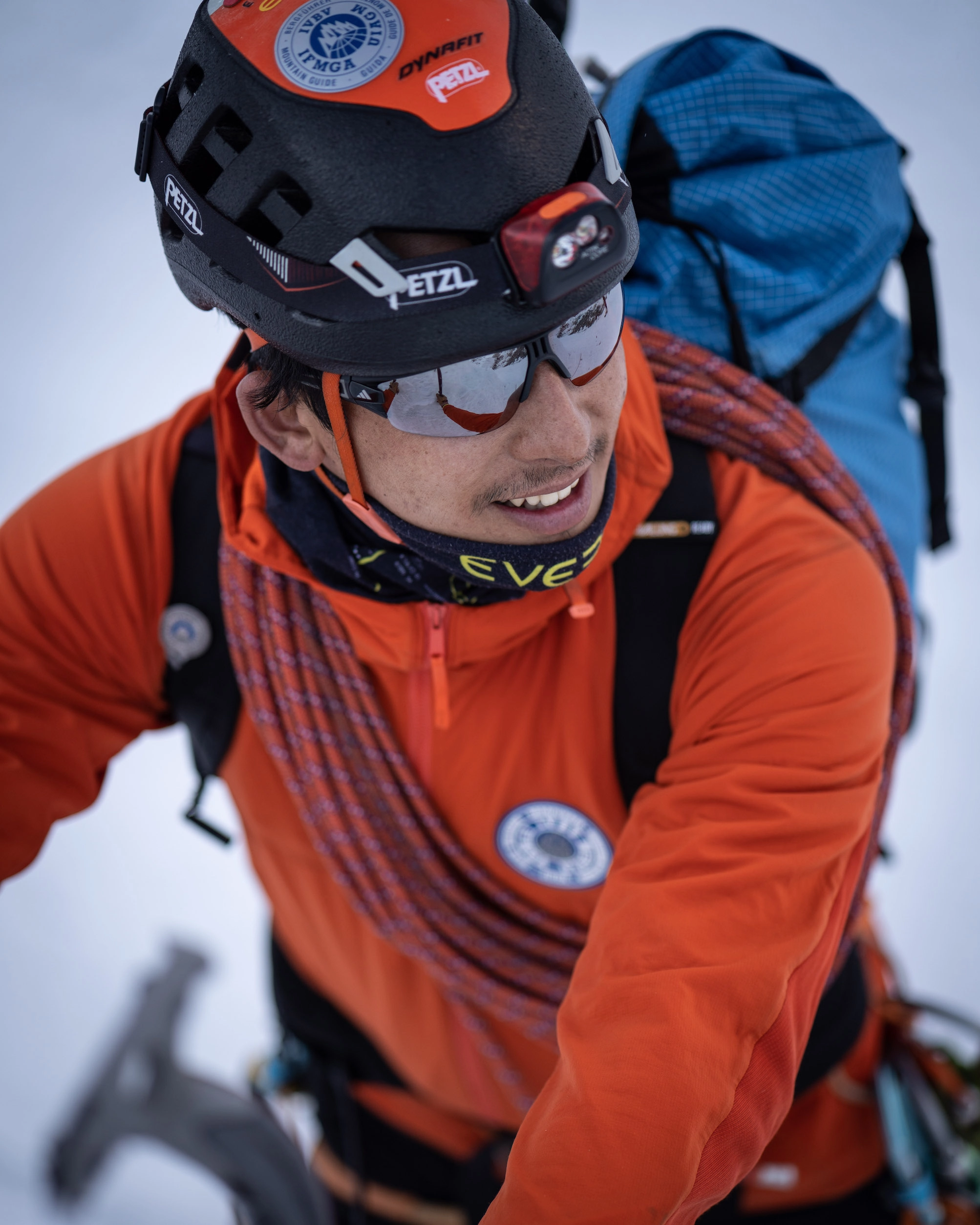
We are a team of professional Sherpas. Not guides who have visited the Himalaya — guides who grew up here, who know these peaks in every season, and who have spent careers developing the technical skills and mountain judgment required to lead expeditions safely and successfully.


Our team holds IFMGA / UIAGM certification — the highest international standard in professional mountain guiding — alongside Advanced Mountaineering, Wilderness First Aid, Helicopter Rescue, and High-Altitude Rescue qualifications. Our lead guide has summited multiple 8,000-metre peaks, including ascents without supplemental oxygen. This is not a credential on paper. It is a lived capability that directly protects every climber who climbs with us.


We offer two expedition structures: a standard option with small-group expedition, and a premium option with 1:1 guide-to-client ratio. Both are built on the same standard of safety, preparation, and professionalism.The standard option maintains a minimum 1:3 guide-to-client ratio with a dedicated IFMGA lead guide and Sherpa support on every climb. Our premium 1:1 private option places you on the mountain directly alongside IFMGA Guide Mr. Prakash Sherpa.


We do not run high-volume operations as our clients are not bookings. They are climbers who have chosen to trust us with something significant and we take that trust seriously on every single expedition. We do not cut corners on acclimatization, staffing ratios, or safety equipment. We organize expeditions the way they should be organized — with patience, precision, and the kind of local knowledge that only comes from growing up in these mountains and spending a career on them.


The Team

Expedition Guides

Every guide on our team has been selected for their technical ability, high-altitude experience, and personal commitment to the safety and success of every climber they lead. All guides carry extensive experience at altitude and hold a proven record of safety, summit success, and strong compatibility with international clients.

The number of guides assigned to each expedition is determined by the size of the climbing team. Our standard guide-to-member ratio is 1:3, ensuring that every climber receives consistent, attentive support throughout the approach, the acclimatization phase, and the technical climb itself.


Climbing Sherpa Support

A dedicated team of experienced Climbing Sherpas supports every expedition with load carrying on the mountain, route preparation, and high camp management. On summit day, we maintain a 1:1 Sherpa-to-climber ratio — a commitment that reflects our belief that the summit push is where support matters most.

Our Climbing Sherpas are not simply load carriers. They are experienced high-altitude professionals who understand the mountain, the route, and the demands of summit day. Their presence alongside every climber on the final push is a core part of how we manage safety and success on the upper mountain.


What to Expect from Our Team

  • Technically qualified, IFMGA-certified lead guidance on every expedition
  • A standard guide-to-member ratio of 1:3 — adjusted based on team size and peak requirements
  • 1:1 Climbing Sherpa support on summit day for every team member
  • Guides who are experienced, companionable, and genuinely invested in your success
  • Full medical kit, satellite communication, and emergency response capability carried by the team at all times
  • A premium 1:1 private option available — summit alongside Mr. Prakash Sherpa directly


Trip Notes

The best seasons to climb Kyajo Ri are Spring (March-May) and Autumn (September-November). The full trekking and climbing program lasts approximately 18 days. Accommodation is in comfortable lodges for most of the trip, with camping tents set up during the climbing phase on the mountain.

We accept a minimum of 2 members with 1 IFMGA certified guide and a maximum of 5 members with 2 IFMGA certified guides, ensuring every climber receives the highest level of personal attention and safety throughout the entire expedition.

Equipment List

1. Pre-Expedition Preparation

a. Physical Preparation

  • Conditioning: Train for months prior to your expedition. Focus on cardiovascular fitness (running, cycling, swimming), strength training (leg strength and core), and endurance. High-altitude training (e.g., at altitude gyms or using a hypoxic tent) is highly beneficial.
  • Climbing Experience: Ensure you have experience with high-altitude climbs, particularly above 6,000 meters. Previous climbs of peaks like Cho Oyu, Aconcagua, Manaslu or Denali are common prerequisites for attempting K2.
  • Mental Resilience: Psychological preparation is key. The conditions on K2 can be harsh, and there are long periods of isolation and mental strain. Mental toughness can be the difference between success and failure.

b. Base Camp and Acclimatization

  • Trekking to Base Camp: Climbers typically start their journey by trekking from Askole, which takes about 8-9 days to get K2 BC depending on the pace. This trek passes through iconic locations like Trango Tower, Goro II, and Concordia.
  • Acclimatization: K2 Camp 2 (6,680m) or Broad Peak camp 3 (6900m), climbers will spend several days to acclimatize to the high altitude. This is critical to prevent altitude sickness.
  • Acclimatization Strategy: Climbers ascend to higher camps and then return to Base Camp for rest (the “climb high, sleep low” method). This process may take 2-3 weeks.


2. Key Considerations for Success

a. Weather

  • Conditions on K2 are extreme. Temperatures can drop below -60°C (-76°F) with wind chill. Weather forecasts are crucial for planning summit attempts. The best time to summit is generally in July.
  • Weather Forecasts: Mountaineers rely on weather forecasts from both meteorological stations and experienced guides to determine the best time for a summit attempt.

b. Oxygen

  • Supplemental Oxygen: At altitudes above 8,000 meters, the air contains only about a third of the oxygen available at sea level. Supplemental oxygen is essential for most climbers. You will need to carefully manage your oxygen supply and ensure you are familiar with how to use the oxygen system.

c. Teamwork and Sherpas

  • Sherpas play a vital role in the expedition. They often serve as guides, carrying heavy loads, setting up camps, and fixing ropes in dangerous sections like the Bottleneck and the below camp 1.
  • Having strong communication, respect for each other, and mutual support within your team and with your Sherpas is key to success.


3. Summit Day: The Final Push

  • Timing: The summit attempt is typically made in the early hours of the morning to avoid the dangerous afternoon storms and the extreme cold. Climbers usually aim to reach the summit before noon.
  • Summit Window: The summit window is narrow due to K2’s severe weather conditions. Climbers must be flexible and ready to make decisions based on the forecast.
  • Return: After reaching the summit, climbers must descend immediately to avoid staying in the death zone too long. Many climbers face exhaustion, frostbite, or other challenges during the descent.
  • Celebration and Reflection: Summiting K2 is a huge achievement, but for many, the real victory is in surviving the journey and sharing the experience with the climbing community.


4. Risks and Challenges

  • Altitude Sickness: Symptoms include headaches, nausea, dizziness, and loss of appetite. Severe cases can lead to High Altitude Pulmonary Edema (HAPE) or High Altitude Cerebral Edema (HACE), which are life-threatening and require immediate descent.
  • Frostbite: Due to extremely low temperatures, frostbite is a significant risk. Proper clothing and regular checks of extremities are essential.

Upcoming Departure Dates

Background
April 3 - 30 May, 2026
Available
June 15 - 1 July, 2026
Available
September 3 - 30 December, 2026
Available
June 8 - 8 February, 2027
Available
April 10 - 11 April, 2026
Available

Route Map

Includes background

Includes & Excludes

Included
  • Unlimited oxygen and Mask regulator for member and guide
  • Camp 1, Camp 2, Camp 3, and South Col tents for members and guides
  • Porters to carry trekking and expeditions gear (1:1 ratios)
  • Medical kit during the trip
  • Accommodation & food in the local lodge are on full board during the trip
  • Base Camp single Dome tent per person and hot shower
  • Flight from Kathmandu to Lukla both way
  • 4-star hotel in Kathmandu with breakfast for 4 nights
  • Hotel / Airport pick up and drop by private tourist vehicle
  • Summit route fixing and SPCC fees
  • Sagarmatha National Park permit and Tims entry fees
x Not Included
  • × International flight tickets
  • × Nepal entry visa fees
  • × Meals in Kathmandu
  • × Alcoholic beverages
  • × Internet wifi
  • × Personal clothing and climbing equipment
  • × Climbing Sherpa summit bonus
  • × Personal travel insurance, medical and rescue insurance
  • × Tips for Staff Guide, Sherpa, and Porters

1:1 Experience with Your Lead Guide

Lead Guide

Prakash Sherpa

CEO

Our lead guide Prakash Sherpa oversees expedition strategy, pacing, and on-mountain decision-making so your climb is supported from preparation through summit push.

You get direct access to experienced guidance, real-time judgement in changing conditions, and a more focused expedition experience built around safety, clarity, and strong leadership.

IFMGA

Package Options

Normal Package

Join a pre-scheduled team led by our experienced high-altitude guides. This package is our most cost-effective and social way to achieve your summit goals.

USD 500
per person / twin sharing
  • 20-day guided expedition
  • All meals during trek
  • IFMGA-certified lead guide
  • 1 assistant guide
  • Teahouse/lodge accommodation
  • All permits and park fees
  • 2 porters per client
  • Group first aid kit
  • Emergency oxygen supply
  • Kathmandu airport transfers
  • All trekking route transport
  • Welcome & farewell dinners
  • Summit certificate
  • ACE expedition duffel bag
Book Standard
Premium Package

Secure a dedicated IFMGA Mountain Guide for a fully bespoke experience. This is the ultimate option for maximum safety, flexibility, and summit commitment.

USD 1,000
per person / twin sharing
  • 20-day guided expedition
  • All meals during trek
  • IFMGA-certified lead guide
  • 1 assistant guide
  • Teahouse/lodge accommodation
  • All permits and park fees
  • 2 porters per client
  • Group first aid kit
  • Emergency oxygen supply
  • Kathmandu airport transfers
  • All trekking route transport
  • Welcome & farewell dinners
  • Summit certificate
  • ACE expedition duffel bag
Book Premium

FAQs

The classic Everest Base Camp trek takes about 12–14 days from Lukla.

Client Stories

From the Summit

Expedition Journal

Dispatches from the Mountains

All Articles
High Altitude Kit List: What our IFMGA Guides Actually Carry
Expedition Report

High Altitude Kit List: What our IFMGA Guides Actually Carry

Climbing at high altitude demands more than strength and determination — it requires the right equipment, careful preparation, and the ability to respond to changing mountain conditions. Our IFMGA-certified mountain guides carry specialized gear not only for their own safety but for the well-being of the entire team. Their packs are carefully organized with technical climbing equipment such as harnesses, helmets, crampons, ice axes, carabiners, ascenders, descenders, and safety slings, allowing them to manage steep snow, ice, and glacier terrain. Depending on the route, they may also carry snow pickets, ice screws, and extra rope for protection and rescue situations. Safety Safety is always the top priority, so guides include a comprehensive high-altitude first aid kit, emergency bivy sack, crevasse rescue gear, and reliable communication devices such as satellite phones or radios. Navigation tools like GPS units and altimeter watches help maintain route accuracy, especially in poor visibility. Proper clothing is equally critical in extreme environments, and guides rely on a layering system that includes moisture-wicking base layers, insulating mid-layers, expedition-weight down jackets, and waterproof outer shells. They also carry multiple gloves, glacier sunglasses, goggles, and face protection to guard against wind, cold, and intense UV exposure. Navigation & Planning Tools Even on established routes, visibility can drop suddenly due to storms or whiteouts. Guides carry: Detailed route knowledge and maps GPS waypoints Weather updates via communication devices Climbing plan with turnaround times Decision-making tools are just as important as physical gear. At high altitude, the smallest item can make a life-saving difference. Our IFMGA guides pack with purpose, balancing weight with safety and efficiency. Their experience ensures that nothing essential is left behind — because in the mountains, preparation is everything.
Sep 15, 2025 Read Article →
Stay Connected